
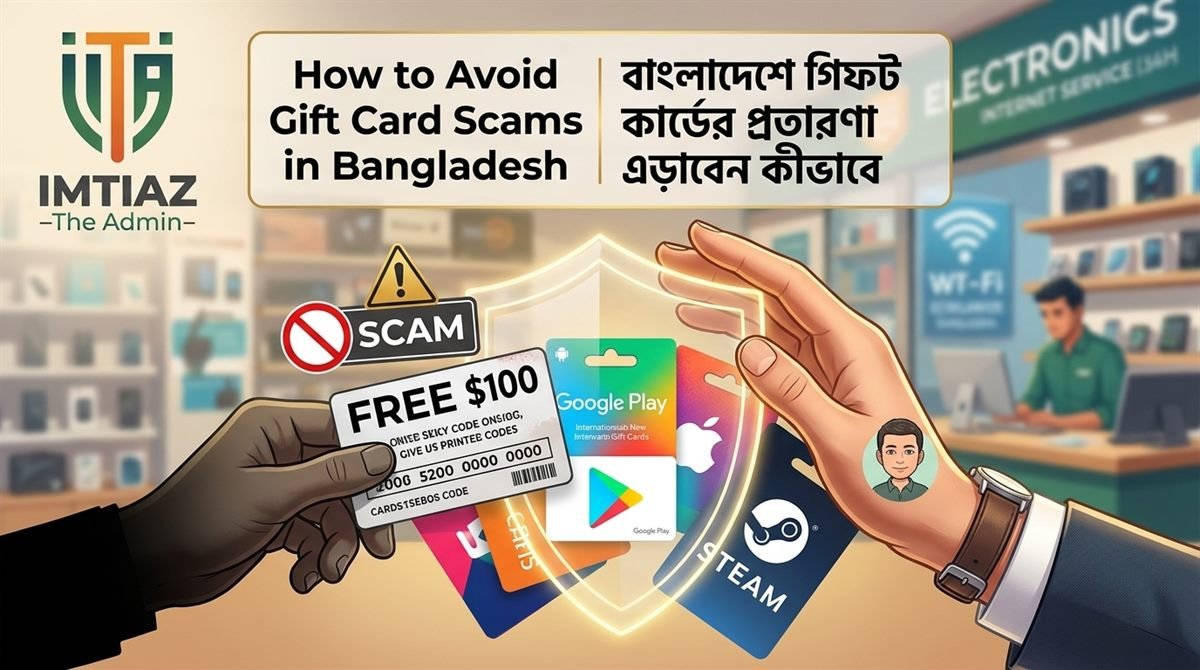
Why gift cards attract scammers
A gift card code is bearer value. Whoever holds the characters holds the money, there is no account to freeze and no transaction to reverse. That is what makes it convenient, and it is exactly what makes it the favourite instrument of every scammer in this market.
Almost every loss I hear about in Bangladesh comes down to one of five patterns. None of them are clever. They work because someone moved before they checked.
1. The buyer who asks for the code first
The oldest one. “Send the code and I will check the balance, then I will pay.” Once the code is read, the value can be spent in seconds and you have nothing to show.
The fix is absolute and it costs you nothing: the rate is agreed in writing, in the chat, before anything moves. A real buyer will quote you a number first. Anyone who needs the code before naming a price is telling you what they are.
2. The seller with a half-used card
This one runs in the other direction. The card is real, the screenshot is real, but part of the balance has already been spent — or it is spent in the minutes between your payment and your redemption.
- Check the balance yourself, on the brand’s own site, before paying.
- Ask for the purchase receipt. A seller with nothing to hide usually has one.
- Be wary of a card that is being sold well under the going rate. That discount is usually paying for a problem.
3. The reversed payment
You receive a bKash or Nagad payment, you hand over the code, and hours later the money is pulled back — because it came from a hacked wallet or a disputed transaction. The card is gone and the payment is gone with it.
Deal with people who have a history you can scroll. Treat an unusually large first order from a brand-new profile as a warning rather than a lucky day.
4. The cloned admin
Someone copies my display picture, my name and my cover photo, then messages members of the groups offering a rate slightly better than mine. This happens often enough that it is worth saying plainly: I do not message people first offering to buy their cards.
- Check the profile creation date and the post history, not the photo.
- A real trader has years of comments under their name that you can read.
- If in doubt, come back to this website and use the links here rather than a profile that found you.
5. The escrow that is not escrow
A third person offers to “hold” the card and the money until both sides are happy. In this market that role is played by reputation, not by software. There is no neutral escrow service in a Facebook group, and the helpful stranger volunteering for the job is usually working with the other side.
What to do if it happens to you
- Screenshot everything — the full conversation, the profile, any payment reference.
- Report it to the group admins with that evidence. A named scammer stops finding victims.
- If money moved through bKash or Nagad, report the transaction to them promptly.
- Tell people. Silence is what lets the same account run the same script next week.
Recovering a spent code is close to impossible, which is why every rule above is about the minutes before you send rather than the hours after.
The short version
Agree the rate in writing first. Check the balance yourself. Deal with people who can be found tomorrow. Start small with anyone new — including me. Those four habits remove almost every scam in this market, and none of them cost you anything.
The full safety guide goes further, and the community guidelines explain how reports are handled in the groups.