
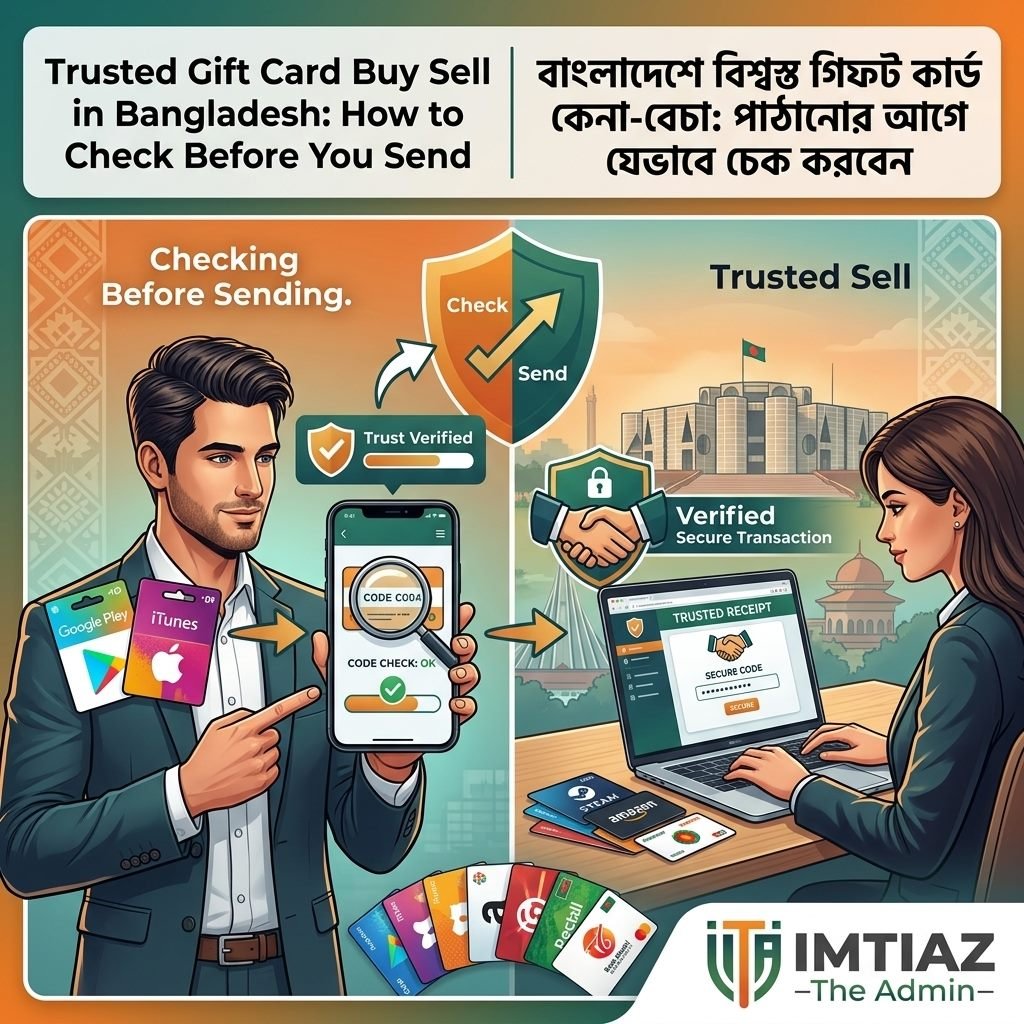
Search for a gift card exchange in Bangladesh and every result will describe itself as trusted, verified, or the best website to sell gift cards for BDT. None of those words mean anything on their own — they are typed by the same person who owns the site.
What follows is a checklist you can run against any trader before you send a code. Run it against me too. If someone objects to being checked, you have your answer.
1. Is there a history you can scroll?
A real trader leaves a trail: comments on group posts going back months or years, other people’s transactions, replies with dates attached. Not a testimonial page they wrote themselves — a public record on a platform they do not control.
A fresh profile with no past is not a bargain. It is the cheapest thing in this market to create.
2. Do they quote before you send?
The correct sequence is: you describe the card, they quote a rate, you agree in writing, then the code moves. Anyone who wants the code first so they can “check what they can do” is asking you to hand over the asset before agreeing the price. There is no honest version of that request.
3. Is the rate live, or a fixed number on a page?
This market genuinely moves. Brand demand shifts, regions go in and out of favour, and stock levels change weekly. A site publishing a fixed percentage is either not updating it or intends to revise it once you are committed. A trader who quotes live and explains what moved the number is being straight with you.
4. Will they say no?
A buyer who accepts absolutely everything — partly used cards, unknown regions, cards you cannot explain — is not being generous. They are either not checking, or not planning to pay. Someone who tells you straight away that they cannot buy a particular card is showing you their standards.
5. Can you start small?
With anyone new, including me, send one small card first. One low-value transaction tells you everything about how a person communicates, verifies and pays. Anyone who pressures you out of starting small has a reason for it.
6. Is there a real identity behind it?
A name, a face, a consistent presence, groups they administer, a way to reach them that is not a single anonymous inbox. People who can be found tomorrow behave differently from people who cannot.
What this looks like on my side
I administer two gift-card groups on Facebook, so my trail is public and other people’s transactions are visible in them. Rates are quoted live and I explain what moved them. I refuse cards regularly — used, unknown origin, wrong region — and I would rather lose a deal than take one that unwinds later. New sellers are welcome to start with the smallest card they have.
You can read unedited screenshots of customer comments, check the groups, or read the full safety guide — which includes how to protect yourself from me.
Ready when you are
Run the checklist first. Then, if you want a number, send the brand, region and face value and you will have one in minutes.